
By Andrew McLoughlin
Vice President of Admissions & Operations
Ask four experienced operators and you may get four different answers – each one partly right.
The excavator teaches coordination. The bulldozer teaches feel and grade. The loader teaches material handling. The backhoe demands versatility. So where should a beginner start?
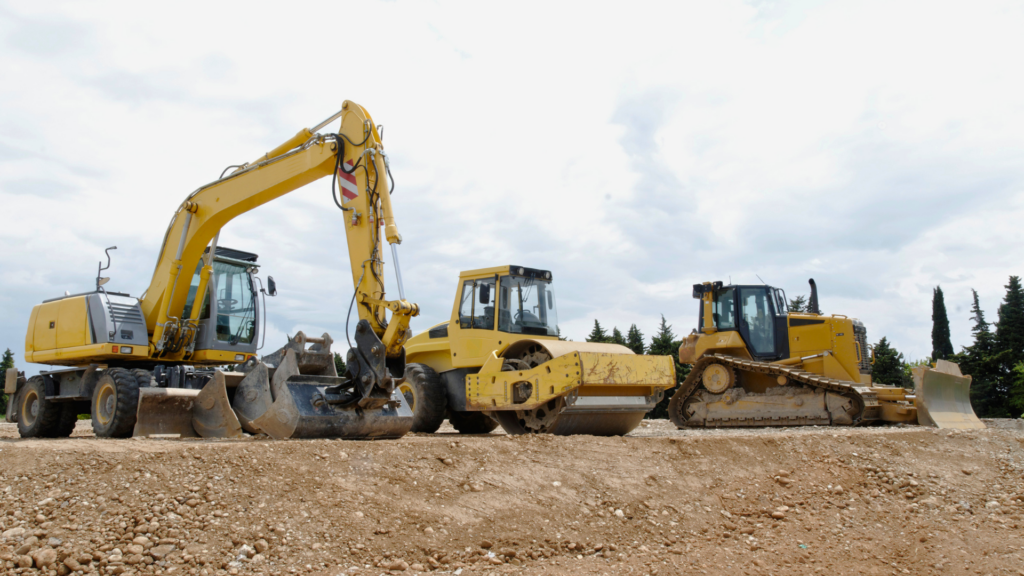
There is no universal answer, because the best first machine depends on the work a person wants to do, the employers in the local market, the student’s prior experience, and how the training is structured.
Still, the debate is useful. Each machine develops a different set of habits, and those habits shape how a beginner understands the jobsite.
The excavator: coordination and precision
An excavator requires the operator to coordinate multiple controls while managing the boom, stick, bucket, upper structure, and travel functions. The beginner learns quickly that moving dirt is not the same as controlling a machine.
Excavator work can introduce digging, trench alignment, loading, spoil placement, swing awareness, blind spots, and the importance of keeping people out of the machine’s working radius. It is a strong starting point for students interested in utilities, site development, demolition, drainage, or excavation.
The challenge is that beginners can become fascinated by the controls and overlook the work plan. Good instruction connects every movement to safety, efficiency, and the condition of the ground.
The bulldozer: feel, planning, and grade
A bulldozer teaches the relationship between machine position, blade control, traction, material, and grade. The operator must learn to look beyond the blade and understand where the material needs to go.
For some students, this is the hardest machine to operate smoothly. Small corrections matter. Ground conditions matter. Patience matters. Modern grade-control technology can provide valuable information, but it does not replace the operator’s understanding of the machine or the site.
The bulldozer can be a powerful first machine for someone interested in grading, clearing, roadbuilding, or site preparation – provided the student receives enough structured practice to develop feel instead of merely driving back and forth.
The articulated wheel loader: production and awareness
A loader teaches material handling, approach, bucket position, travel paths, stockpile management, loading cycles, braking, visibility, and coordination with trucks and ground personnel.
Because the work cycle may appear simple, beginners can underestimate it. Efficient loader operation requires planning and consistency. A poor approach wastes time, spills material, increases tire wear, and creates risk around trucks and people.
For quarry, aggregate, recycling, public works, and material-yard roles, the loader may provide the most relevant first foundation.
The tractor-loader-backhoe: versatility with complexity
The backhoe combines a front loader with a rear digging attachment. That versatility makes it common in utility, municipal, maintenance, and smaller-site work. It also asks a beginner to understand two operating positions and two different types of work.
A backhoe can teach broad jobsite awareness, setup, stabilizer use, digging, loading, travel, and attachment management. It may be an excellent first machine for a student seeking versatility, though the learning curve should not be confused with instant proficiency.
The best first machine is not the one that looks most impressive. It is the one connected to a clear job goal and taught through structured, supervised practice.
The real answer: learn the work, not just the controls
A new operator should learn inspections, safe mounting and dismounting, machine limitations, communication, blind spots, basic maintenance awareness, ground conditions, and how to follow a work plan. Those skills transfer across machines.
Training can provide a foundation. It does not turn a beginner into an experienced operator, guarantee employment, or replace an employer’s site-specific orientation and authorization. The honest goal is a prepared beginner who respects the equipment and is ready to keep learning.
If possible, students should tour the training site, understand the actual hands-on exercises, and speak with employers about which machines are used in the work they want. Choosing a machine because it looks exciting on social media is not a career plan.
There may never be one correct answer to this debate. That is what makes it worth having.
Sources
U.S. Bureau of Labor Statistics: Construction Equipment Operators